
Home / Spray Foam Insulation
Flagship service
Spray Foam Insulation in Trinity, AL
Insulation and air sealing in one application, specified for Tennessee Valley heat and humidity.
The material
What spray foam actually does
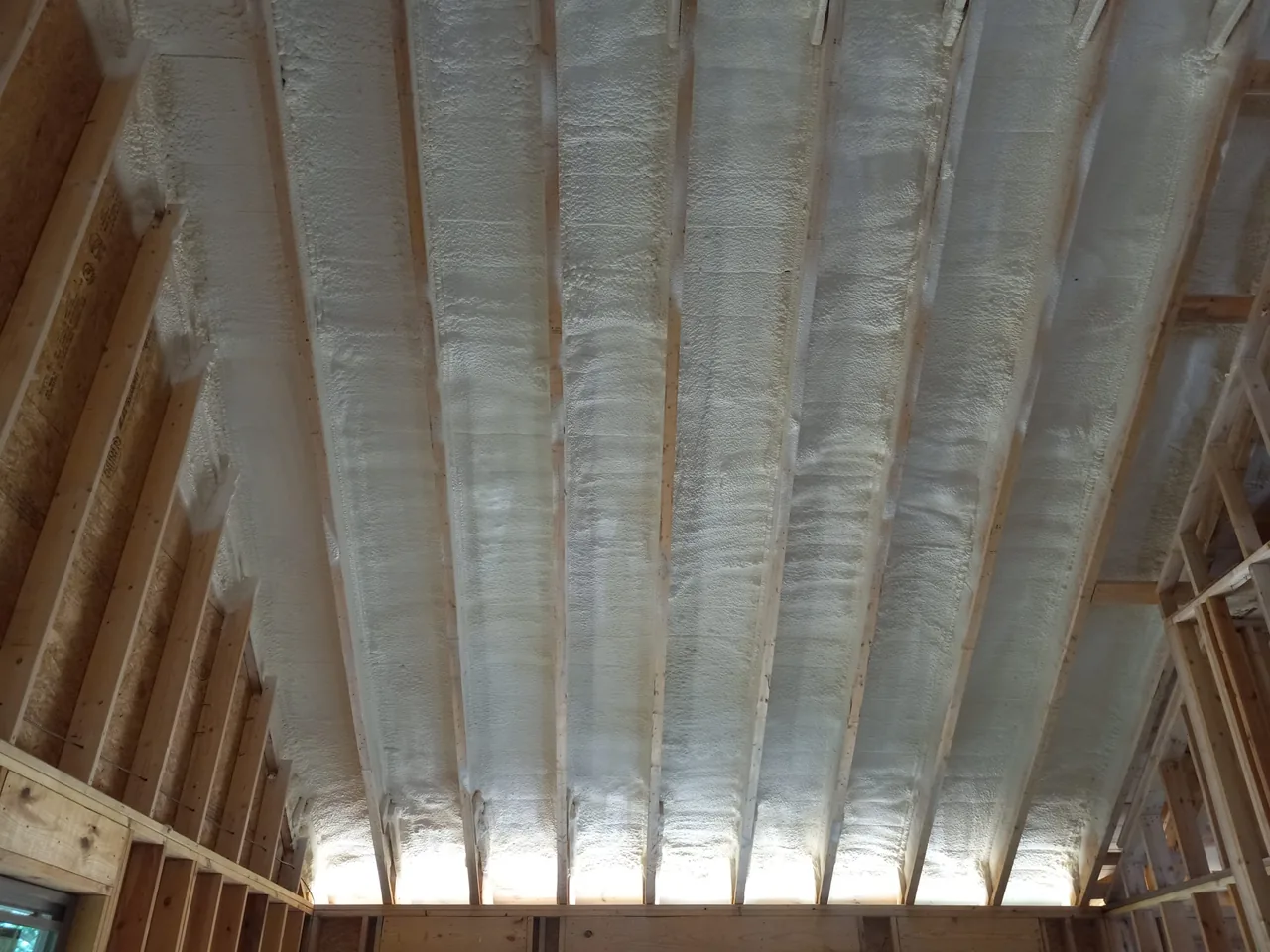
Spray polyurethane foam goes on as a liquid and expands into a solid, unbroken layer. Where batt or loose-fill material leaves seams, foam conforms to the exact shape of the cavity and seals the cracks, penetrations and rim joists it touches while it insulates. That pairing, R-value and air sealing in a single pass, is why it performs so well around Trinity and Decatur, where climate zone 3A means months of air conditioning and humid outdoor air pressing against the building for most of the year.
It is not the right answer for every assembly, and we say so when it is not. But where air leakage and moisture are the real problems, foam solves both at once in a way other materials cannot. Use the free quote form and we will scope it in writing.
Two products
Open cell vs closed cell, in plain terms
Open-cell spray foam
Open-cell foam is soft, flexible and expands aggressively on application. At roughly R-3.5 per inch it needs more depth to hit a given R-value, but it fills irregular framing completely, deadens sound and costs less per square foot. It is vapor-permeable, which matters in assemblies that need to dry. Typical uses here: roof decks in unvented attic assemblies and interior wall cavities.
Closed-cell spray foam
Closed-cell foam cures rigid and dense, around R-6 to R-7 per inch, and at sufficient thickness it acts as its own vapor retarder. It adds stiffness to the structure and tolerates incidental moisture, which makes it the standard choice for crawl space walls, rim joists and the metal shops and pole barns common on rural Morgan County properties, where condensation is the enemy.
Which one your project needs depends on the location, the moisture exposure and the depth available. That call gets made during the on-site inspection, and the estimate names the product either way.
Climate fit
Built for a 3A cooling-dominated climate
The Tennessee Valley's zone 3A classification means long, hot, humid summers, mild winters and an outside-to-inside moisture drive for most of the year. An air leak in August is not just lost cooling. It is a doorway for humid air that condenses on cooler surfaces inside the envelope, feeding musty smells and inflating the power bill at the same time.
Spray foam addresses both halves of that problem in one pass: it insulates and it air seals. In an attic, foaming the underside of the roof deck converts a vented attic into an unvented, conditioned assembly, which brings the ductwork inside the thermal boundary and takes real load off the air conditioner through the long Alabama cooling season. In a crawl space, closed-cell foam on the walls and rim joists stops humid outside air from ever reaching the cooler surfaces where condensation forms.
Applications
Where we install spray foam
Attics
Roof-deck foam is the highest-impact attic application in this climate. When attic temperatures climb well past outdoor air on a Tennessee Valley summer afternoon, every degree matters to the ducts and air handler sitting in that space. See attic insulation for the full picture, including when blown-in on the attic floor is the smarter spend.
Crawl spaces
Closed-cell foam on crawl space walls and rim joists, paired with a ground vapor barrier, converts a damp vented crawl space into a dry, sealed one. For the ranch homes common around Trinity and Hartselle this is often the single most noticeable upgrade in the house. More at crawl space insulation.
Walls and rim joists
In new construction and open-stud remodels, foam fills and seals the wall cavity in one step. In existing homes the rim joists alone are a high-value target: a small area that leaks an outsized amount of air.
Metal buildings
Condensation forms when warm, humid air meets cool metal panels. Closed-cell foam bonds directly to the panel, stops the condensation and stiffens the skin. Shops, pole barns and commercial metal buildings are covered at metal building insulation.
Honest limits
When spray foam is not the right call
Foam is a premium product and it is not the answer to every insulation problem. We will steer you away from it in these situations:
- Attic floor jobs where the goal is simply R-value. Blown-in material reaches the same depth target for less money, and the air sealing can be handled separately first.
- Active water problems. A leaking roof or a crawl space with standing water needs repair before any foam goes in. Foam sprayed over a leak hides it and makes it worse.
- Very small, isolated gaps. A single rim joist bay or a couple of penetrations rarely justifies bringing out a rig and crew.
- Occupied spaces that cannot be vacated. Installers follow manufacturer re-entry guidance, typically around 24 hours for occupants after application. If that is impossible for your household or business, we plan around it or recommend another material.
- Certain roof decks. Some roof covering manufacturers limit foam application to the underside of the deck. We check before recommending it.
When a cheaper system is the right answer, the estimate says so. That is the whole point of a written, itemized scope.
Our process
Getting spray foam installed is easy
Request a free estimate
Call 256-956-3453 or send the quote form and we will schedule a visit.
On-site inspection
We measure the space, check for air leaks and moisture, and identify the right material.
Written, itemized price
You get the scope and cost in writing before any work is scheduled.
Installation and cleanup
The crew preps the area, installs the insulation, cleans up and walks the finished work with you.
Common questions
Spray foam FAQ
Open cell or closed cell: which do I need?
It depends on the location and the moisture exposure. Roof decks and interior walls usually take open cell; crawl spaces, rim joists and metal buildings usually take closed cell. The inspection settles it, and the estimate names the product.
How long before we can go back in the house?
Installers follow the manufacturer's re-entry guidance, typically around 24 hours for occupants. We confirm the exact timing for your job before work is scheduled.
Can spray foam go over my existing insulation?
Sometimes, but on attic floors removal is usually the better path: old material hides air leaks and traps moisture. The inspection identifies what should stay and what should go.
Does spray foam help with noise?
Open-cell foam absorbs sound well and noticeably quiets interior walls and roof decks. Closed cell is denser and less effective acoustically. Neither replaces a sound-rated wall design.
Is spray foam worth it in an older Trinity area home?
Often yes, especially at the roof deck and in vented crawl spaces, where older homes leak the most air. The inspection shows where the leaks actually are before anyone quotes a scope.
Want to know what spray foam would cost for your building?
Call 256-956-3453 or send the details and we will schedule the inspection.
Free written estimates • No obligation • Local team